Your wedding day will pass in a blur. Between the long makeup session, guests arriving, the akad nikah ceremony, and the reception at the dewan, you might realise the camera stopped rolling before you even had a chance to soak it all in. That's why a wedding day photo timeline matters. Not just for your photographer, but for everyone involved.
In Malaysia, weddings often involve two parts: the akad nikah and the reception, or sometimes just one big majlis with a kenduri. Each part has its own rhythm and challenges. When you understand when the light is best, when guests are most present, and when you're most relaxed, you can build a timeline that captures more meaningful photos, not just stiff formal shots.
Why a Wedding Day Photo Timeline Matters
Many couples assume the photographer will just know when to shoot. The truth is, a professional knows technique, but they don't know your schedule unless you tell them. Without a timeline, your photographer is guessing, and what usually gets missed are the spontaneous moments that matter most: your mother wiping away a tear, your cousin dancing at the edge of the hall, or a toddler falling asleep on grandma's lap.
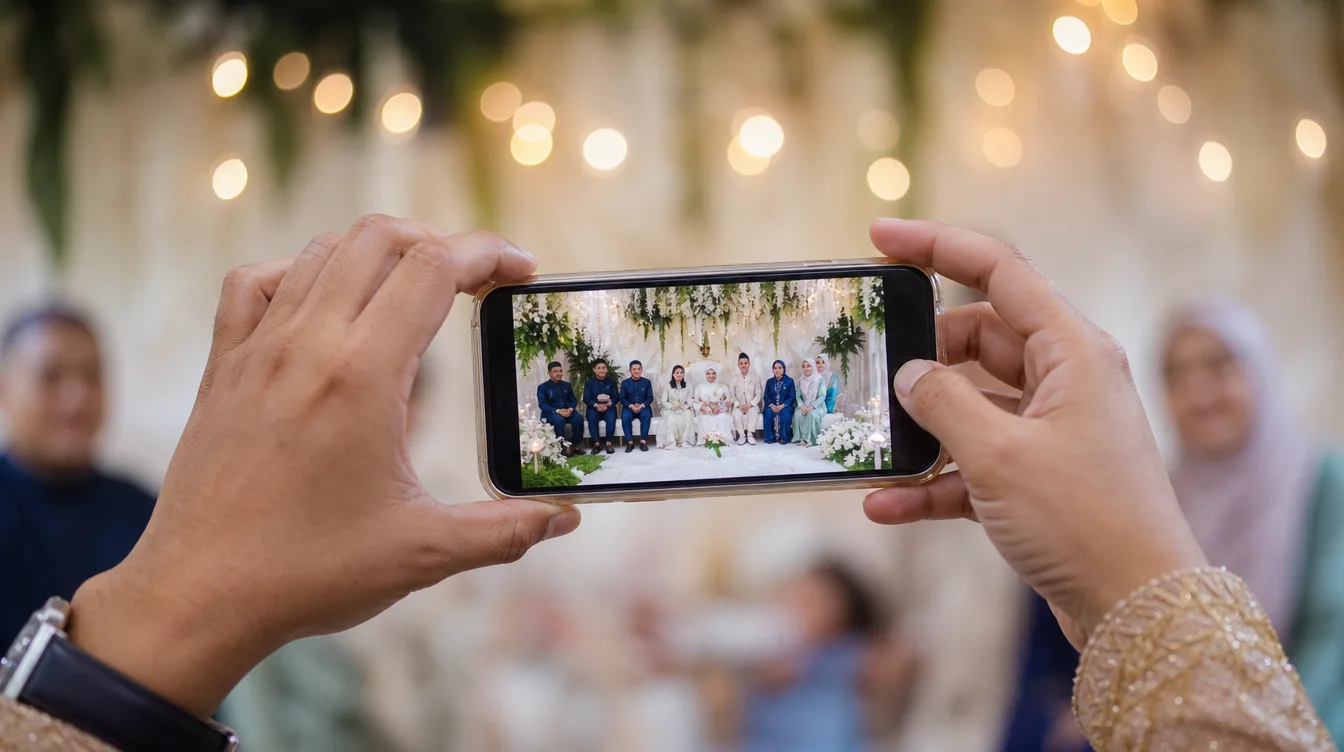
Beyond the photographer, your guests need guidance too. When you share a simple timeline on the family WhatsApp group or place one at the entrance of the dewan, guests feel more prepared. They know when to show up for family portraits, when the meal starts, and when they can take their own photos without disrupting the ceremony. This reduces confusion and makes the whole event run smoother.
Finally, a good timeline lets you collect photos from multiple sources. One photographer can't be everywhere at once. But when guests know when key moments are happening, they'll capture from different angles. To make it easy for all these photos to land in one place, read our guide on how to set up a shared photo gallery for your wedding.
Before the Ceremony: Getting Ready and Makeup
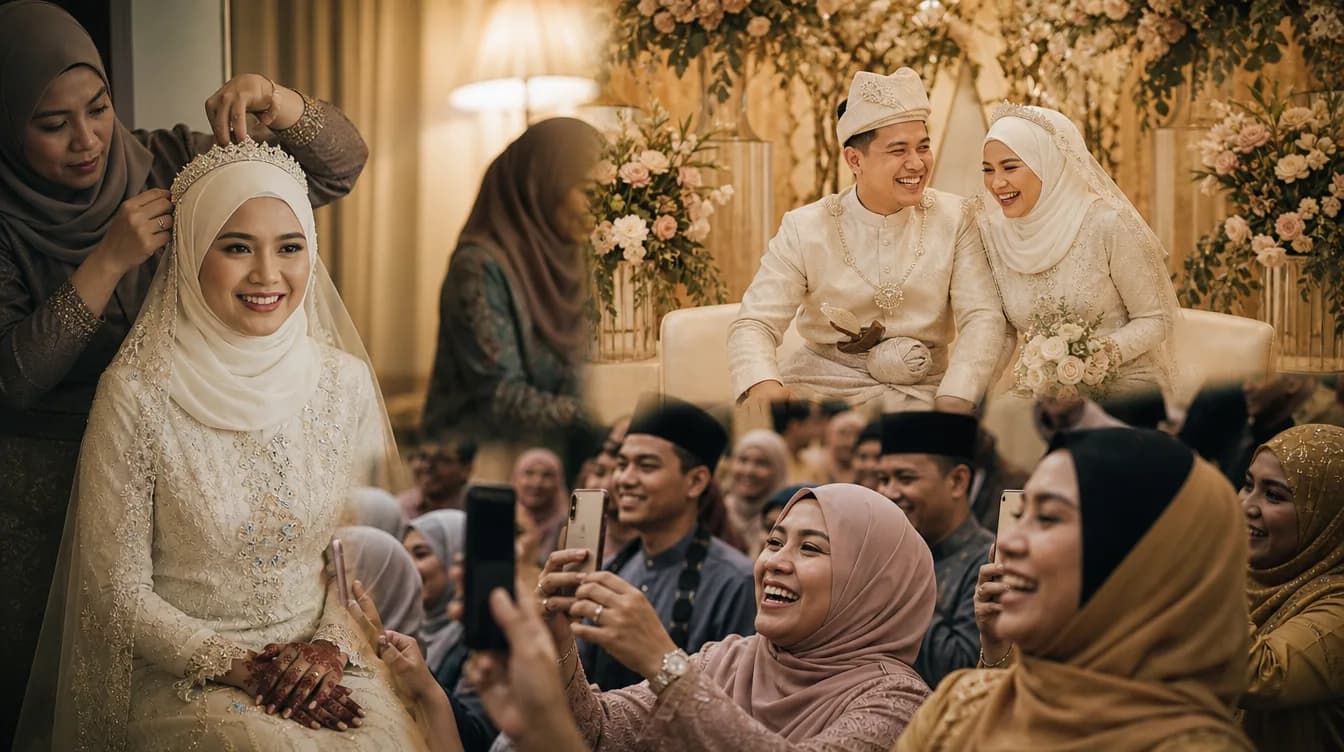
The makeup session usually starts as early as 5 or 6 in the morning, especially if the ceremony begins in the morning. This is the calmest and most intimate time of the day. Soft morning light comes through the windows, and you're not yet surrounded by guests. A good photographer will use this time to capture details: the rings, the dress, the shoes, and the quiet moments sitting in the chair while chatting with your mother or sister.
Tell your photographer in advance if you want candid shots during preparation. Some couples want a photo of them reading a prayer with family, or the groom getting dressed with help from his brother. All of this needs planning so the photographer can be in the right place at the right time.
Lay out all important items (rings, dress, shoes, flowers) in one spot before the photographer arrives. This saves time and lets the photo session flow without anyone scrambling to find things.
Akad Nikah: The Official Moment You Can't Repeat
The akad nikah is the most important moment of the wedding. It happens once and cannot be repeated. It usually takes place in the morning, around 9 or 10 am, after the makeup session. In some states, it's held at a mosque or at the bride's home. The light at this hour is usually bright but still soft, perfect for both formal and candid shots.
Make sure your photographer is positioned in a way that doesn't disrupt the ceremony. Discuss with the tok kadi or imam beforehand about where the photographer can stand. Some allow them close, others prefer them at the back. Respect these rules because they involve adab and the sanctity of the ceremony.
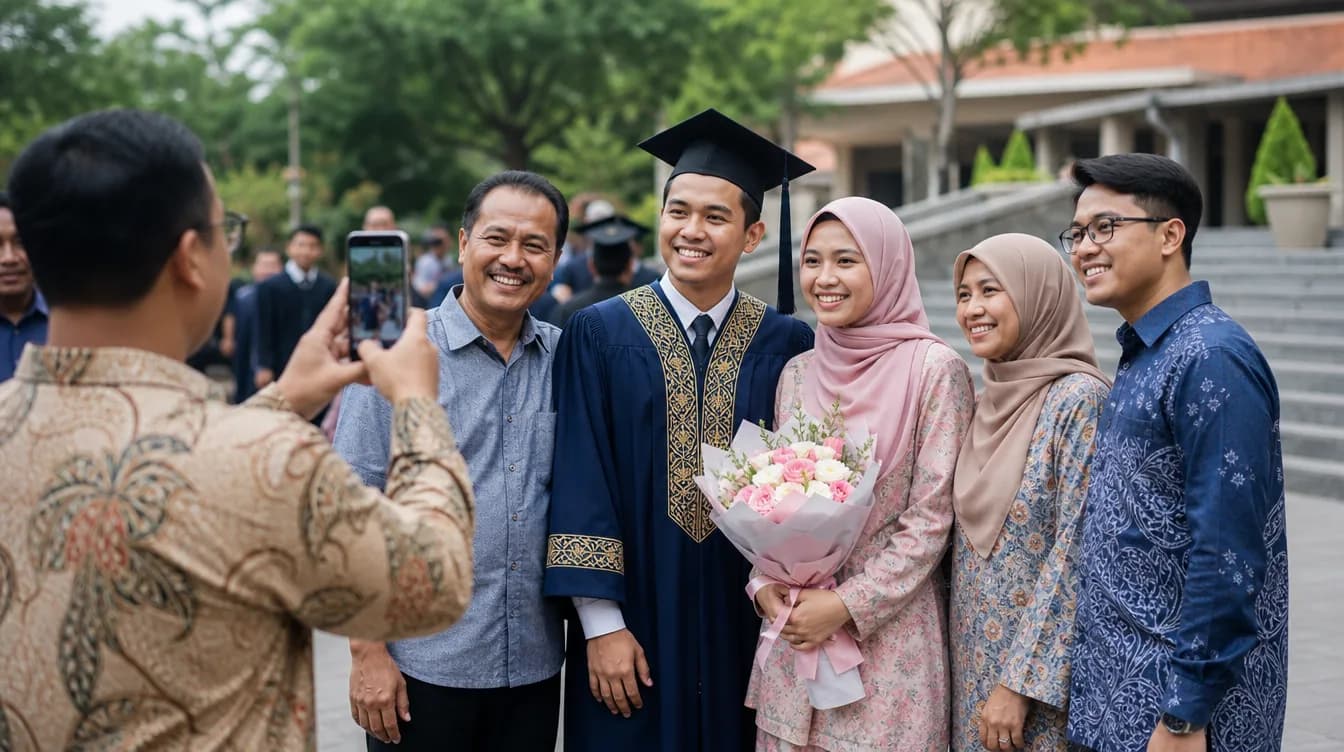
After the akad, there's usually a family photo session. This is the right time to gather the extended family. Let representatives from both sides know so they're ready. If you want ideas for a digital guestbook that can be shared alongside photos, check out digital guestbook ideas for Malaysian weddings.
Reception and Kenduri: When Guests Are Most Present
The reception or kenduri usually starts around midday or in the afternoon. This is the busiest part of the day. Guests arrive in waves, some early to get good seats, some late because of work. The couple needs to greet everyone, walk from table to table, and sometimes change outfits two or three times.
The best time for reception photos is in the first 30 minutes after the couple enters the hall. At this point, all eyes are on you, and the hall lighting is usually still bright. After that, guests start eating and the atmosphere becomes more relaxed. This is also a great time for candid shots: guests chatting, kids running around, and elders smiling at the couple.
If you want more lively photos, consider having a live photo wall or slideshow. It not only entertains guests but also encourages them to take and share photos. You can read more about live photo wall slideshows for your reception.
- Guest arrival: first 30 minutes after doors open
- Couple's entrance: the most anticipated moment, make sure your photographer is ready
- Family portraits: usually after the couple greets their parents
- Meal service: a good time for candid guest photos
- Cake cutting and speeches: if you have them, these are must-capture moments
Golden Hour: Best Light and Atmosphere
If your event is outdoors or in a garden, golden hour is around 5 to 7 pm. At this time, the sunlight is warm and soft, perfect for romantic couple portraits. If you want a session without guest interruptions, schedule it during this window, perhaps after the meal service ends.
But remember, Malaysian weather is unpredictable. Afternoon rain is common. Have a Plan B: maybe a covered area at the venue, or creative indoor lighting. An experienced photographer will know how to adapt.
For indoor venues, artificial lighting can be tricky. Make sure the hall has enough light, or discuss flash usage with your photographer. If you want tips for beautiful phone photos even in low light, there's a guide on tips for beautiful phone photos at events.
How to Share the Timeline with Guests and Photographers
A good timeline is useless if no one knows about it. Print a simple version and place it at the entrance of the dewan, or share it in the family WhatsApp group. For your photographer, give a full copy with notes on the moments you don't want to miss. Early communication prevents misunderstandings on the day itself.
Another way to ensure photos are collected properly is by using a QR code. Guests simply scan the code and upload their photos without creating an account. This is especially easy for older guests or those not comfortable with technology.
After the event, you'll be surprised by how many photos have been collected. From your professional photographer to guests snapping on their phones, everything can be brought together. You can download all photos as a ZIP and keep them as memories.
Place the QR code in multiple spots: entrance, dining tables, and photo corner. The easier it is for guests to see, the more photos they'll share.
After the Wedding: Organising and Reliving the Memories
The event is over, but the work isn't. You need to organise the photos, pick the best ones, and store them safely. Don't let these photos sit in your phone or a WhatsApp group that will disappear when your phone breaks. Move them to an organised gallery and make a backup.
Take time to look through the photos with your partner. You'll notice details you missed on the day: an aunt's rare smile, a cousin's laughter, or the table decorations you worked so hard on. This is the real value of photos, not just documentation, but memories to share with future generations.
Finally, don't forget to thank guests who shared their photos. Maybe you can reshare a few in the family group as a token of appreciation. This encourages a healthy sharing culture and ensures no photo stays stranded on someone's phone.
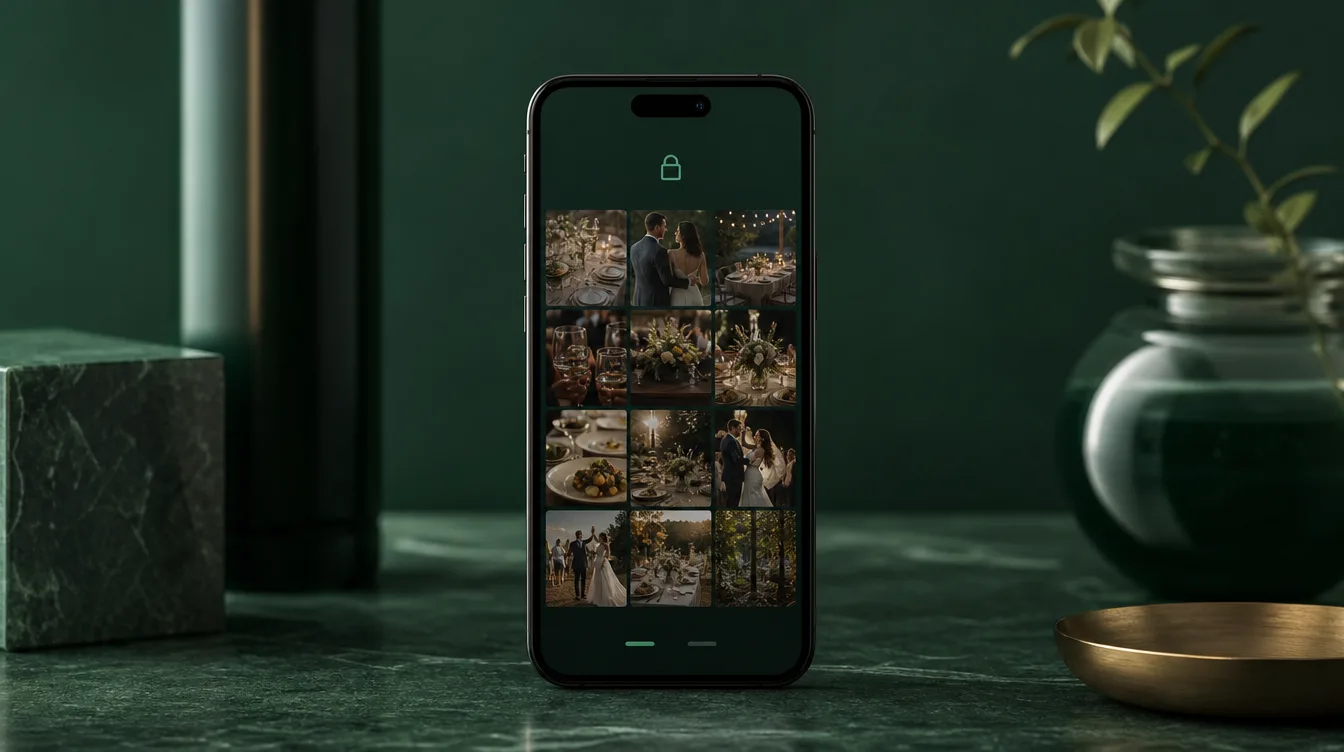
For hosts who want to manage their event more smoothly, download the Gathrly iOS app. You can create an event gallery, invite guests with a QR code, and collect all photos in one place. Guests don't need an account, just scan and upload. Easy for you, easy for them.